Cutting ACOS is easy. Lower your bids, pause a few keywords, and watch the number drop. The problem is that sales often drop with it. Then your rankings slip, and the whole account gets weaker.
A strong Amazon PPC strategy does something harder. It lowers wasted spend and grows sales at the same time. This playbook shows you how, step by step. You will learn which numbers to track, how to set up your campaigns, which Amazon PPC tips cut waste fast, and which PPC optimization techniques help you scale.
| Quick answer: A good Amazon PPC strategy starts with your break-even ACOS. Next, split campaigns by purpose (find keywords, test them, then scale the winners). Cut wasted clicks with negative keywords, and put more budget on exact match keywords that already sell. Fix your listing too, because ads only bring traffic. |
Key takeaways
- Break-even ACOS equals your profit margin before ads. Judge every campaign against it.
- Track ACOS and TACOS together. A low ACOS with falling total sales is not a win.
- Use three campaign jobs: discover (auto), test (broad and phrase), scale (exact).
- Cut waste first with negative keywords, then scale what already converts.
- Fix price, images, and reviews. A weak listing keeps ACOS high.
Start With the Numbers: ACOS, Break-Even ACOS, and TACOS
You cannot cut ACOS well if you do not know what a good number looks like for your business. Start with three metrics.
What is ACOS?
Amazon Ads defines ACOS as ad spend divided by ad revenue, times 100. If you spend $50 on ads and make $100 from those ads, your ACOS is 50%. The same guide says there is no single “good” ACOS. The right number depends on your goals and your margins.
What is break-even ACOS?
Break-even ACOS is your profit margin before ad costs. If your margin is 35%, your break-even ACOS is 35%. At 35%, you make no profit on the ad sale. Below 35%, you earn money on each ad sale. Above it, you lose money on that sale, even if the sale helps your rank.
This is the most important number in your Amazon PPC ACOS plan. Every bid, budget, and target should be judged against it.
Here is how the math works at three different margins. Profit per ad sale (before other costs) is your margin minus your ACOS.
| Your margin (break-even ACOS) | If your ACOS is | What it means |
|---|---|---|
| 20% | 30% | You lose 10 points of each ad sale |
| 35% | 30% | You keep 5 points of each ad sale |
| 50% | 30% | You keep 20 points of each ad sale |
What is TACOS?
TACOS is ad spend divided by total sales, which means ad sales plus organic sales. It shows whether your ads are helping the whole business, not just the ad campaigns.
Here is a simple example. You spend $1,000 on ads. Those ads bring $5,000 in sales, and your total sales are $15,000. Your ACOS is 20%, but your TACOS is only about 6.7%. When TACOS falls over time while sales grow, your ads are likely building organic sales too.
| Metric | Formula | What it tells you |
|---|---|---|
| ACOS | Ad spend ÷ ad sales × 100 | How efficient your ads are |
| Break-even ACOS | Your profit margin before ads | The line between profit and loss on ad sales |
| TACOS | Ad spend ÷ total sales × 100 | How ads affect your whole business |
Why Cutting Spend Alone Backfires
When you cut spend across the board, you also cut the clicks that bring sales. Fewer sales can lower your organic rank for key search terms. Then you get less free traffic too. This is why ACOS alone can mislead you.
Watch ACOS, TACOS, click-through rate, and conversion rate together. A low ACOS with falling total sales is not a win.
Does a lower ACOS always mean more profit?
No. A lower ACOS only helps if sales hold steady or grow. If you cut bids so far that sales drop, you can end up with a lower ACOS but less total profit. Always check total sales and TACOS next to ACOS.
Smart spending beats low spending. One Brandeonix client grew sales by 45% in one quarter while cutting ad spend by 34%. Results like this come from spending smarter, not just spending less.
Step 1: Build Your Amazon PPC Strategy on a Clear Campaign Structure
Scaling is hard when every keyword sits in one messy campaign. Give each campaign one job.
What is the best Amazon PPC campaign structure?
The best structure separates campaigns by purpose. Use auto campaigns to discover terms, broad and phrase match to test them, and exact match to scale proven winners.
| Campaign type | Main job | Bids and budget | Success signal |
|---|---|---|---|
| Auto | Find new search terms | Low to moderate; watch closely | New converting terms found |
| Broad / phrase | Test promising terms | Moderate; adjust by results | Terms with orders at fair cost |
| Exact | Scale proven keywords | Higher; isolated budget | Steady sales under target ACOS |
Use auto campaigns to find keywords
Auto campaigns let Amazon match your ads to search terms. Use them to discover what shoppers actually type. Treat them as a research tool, not your main sales engine.
Use broad and phrase match to test
Take the search terms that look promising and test them in broad or phrase match campaigns. This is where you see which terms get clicks and orders at a fair cost.
Use exact match to scale
Move proven keywords into exact match campaigns with their own budgets. This is your scale bucket. You control bids tightly, and you can see exactly what each keyword earns.
Keep products with different economics apart
Do not put products with different prices or conversion rates in the same ad group. One weak product can distort your data and drain the budget of a strong one. Give each key product its own space.
Step 2: Amazon PPC Tips That Cut Wasted Spend Fast
Once the structure is clear, remove the waste. These Amazon PPC tips usually give the fastest ACOS gains.
Review search term reports every week
The search term report shows what shoppers typed before they clicked. Look for terms with many clicks and no sales. These are the leaks.
Add negative keywords the smart way
Do not block a term after one or two clicks. Seller Labs suggests waiting until a term has spent about one to two times your average cost per order before you call it a failure. Many sellers also use a simple rule of thumb, such as 10 to 15 clicks with no sale. Pick the rule that fits your price point.
When you do add a negative, start with negative exact. It blocks only that phrase. Use negative phrase only when you are sure a whole group of terms is irrelevant.
How many clicks should a term get before you add it as a negative keyword?
Wait until the term has spent about one to two times your average cost per order, or about 10 to 15 clicks with no sale. Use the rule that fits your price. Low-price products can use the click rule. Higher-price products should use the spend rule.
| Negative match type | What it blocks | When to use it |
|---|---|---|
| Negative exact | Only the exact search phrase | Your default choice |
| Negative phrase | Any search containing that phrase in order | Only for terms you know are always irrelevant |
Lower bids on bleeders before you pause them
A bleeder is a keyword with high spend and an ACOS far above your target (for example, above 80%). If it still brings some sales, lower the bid first. Keep it alive for cheap, extra traffic. Pause it only if it stays bad.
Test dayparting
Check your sales by hour. If almost nothing sells between midnight and 5 a.m., you may be paying for clicks that never convert. If your tools allow it, lower bids in that window. Test for a few weeks before you decide, because buying patterns change by product and season.
How do you diagnose a high ACOS?
Match the symptom to the likely cause before you change anything.
| What you see | Likely cause | What to do |
|---|---|---|
| Many clicks, no sales | Irrelevant terms or weak listing | Add negatives; review price, images, and reviews |
| High impressions, low click rate | Weak main image, title, or price | Improve the main image and title |
| Good click rate, low conversion | Listing or price problem | Fix content, price, and ratings |
| Low ACOS but flat sales | Bids too low on winners | Raise bids on proven exact match keywords |
Step 3: PPC Optimization Techniques to Scale Sales
After your spend is clean, you can push harder on what works. These PPC optimization techniques help you grow without wasting money.
Can Amazon PPC help your organic ranking?
It can. When a keyword brings steady, profitable sales, give it more budget and protect its position. Strong sales on a term can support your organic rank for that term over time. Amazon does not publish exact ranking rules, so treat this as a trend to watch, not a promise. If it works, you get free orders and a lower TACOS.
Target competitor listings with product targeting
Product targeting lets you place ads on specific competitor listings or categories. Helium 10 explains this tactic, and suggests looking for competitors with strong traffic but weaker star ratings. You can also target listings with higher prices than yours.
Check the competitor page first. If their listing looks better than yours, you will pay for clicks that do not convert.
Win back shoppers with Sponsored Display
Sponsored Display can show your ads to shoppers who viewed your product but did not buy. These shoppers already know your brand, so they often convert better than cold traffic. Keep this budget small at first, then grow it if the numbers support it.
Step 4: Fix Your Listing, the Hidden ACOS Killer
Ads bring clicks. Your listing turns clicks into orders. If conversion is low, your ACOS will stay high, no matter how clean your campaigns are.
- Price: make sure you are competitive for your niche, especially when you plan to scale.
- Images: a strong main image helps click-through rate. Extra images, A+ Content, and video help conversion.
- Reviews: keep a steady, safe system to earn real reviews.
Ratings matter more than most sellers think. A Pattern analysis of star ratings found that listings with 3.5 stars converted at about 24%, while listings with 4.5 stars converted at about 29%. That data is from 2020, but the lesson holds: better ratings make every ad dollar work harder.
A Simple Weekly PPC Routine
| How often | Task | Why it matters |
|---|---|---|
| Weekly | Review search terms; add negatives; move winners to exact match | Stops waste and finds new winners |
| Weekly | Lower bids on bleeders; raise bids on keywords under target ACOS | Keeps spend tied to results |
| Weekly | Check ACOS, TACOS, spend, and total sales together | Shows if you are cutting sales by mistake |
| Monthly | Check listing conversion, price, and ratings on top products | Finds the hidden causes of high ACOS |
| Monthly | Review your change log and results | Shows which changes worked |
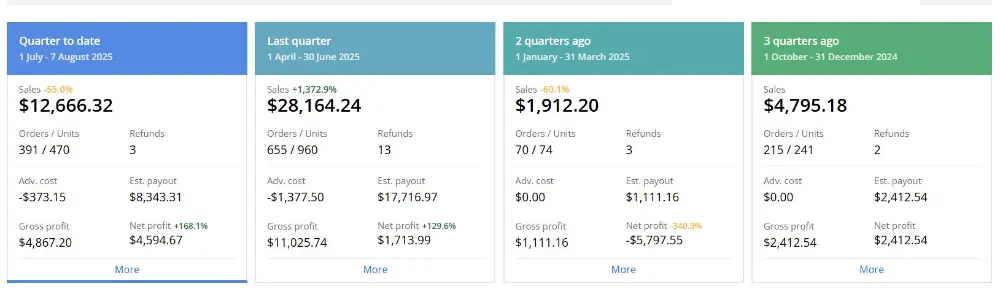
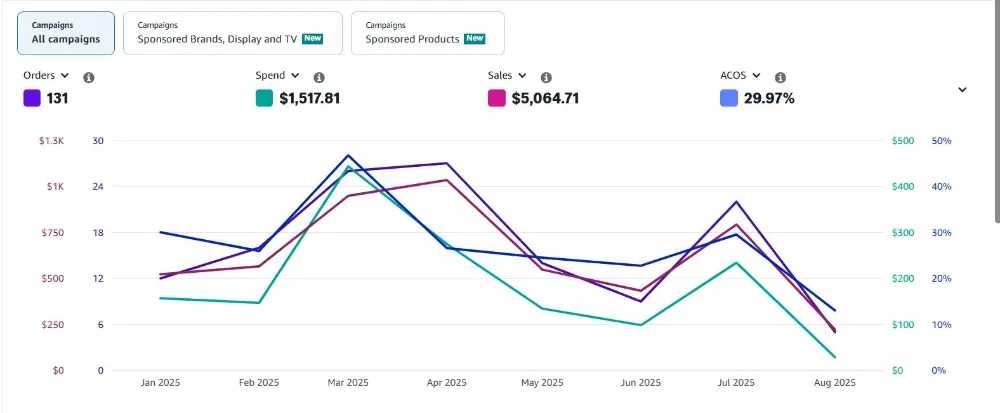
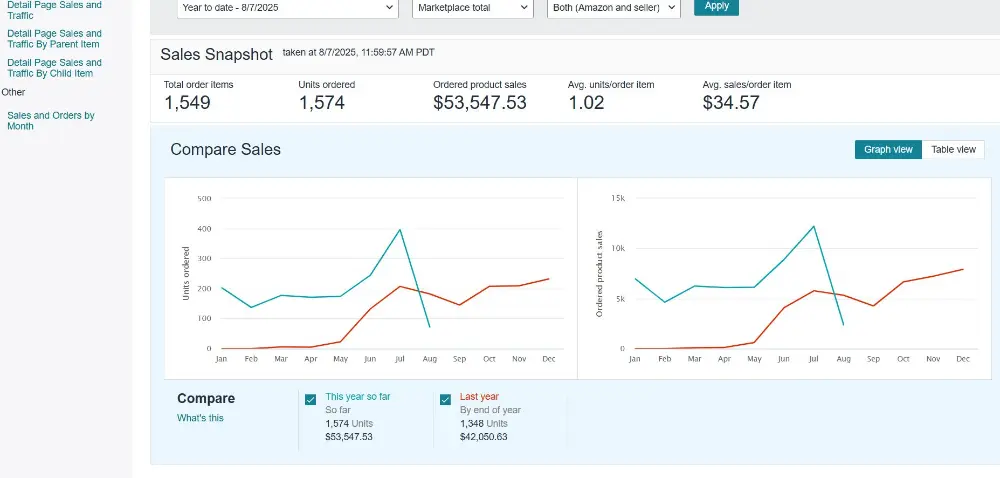
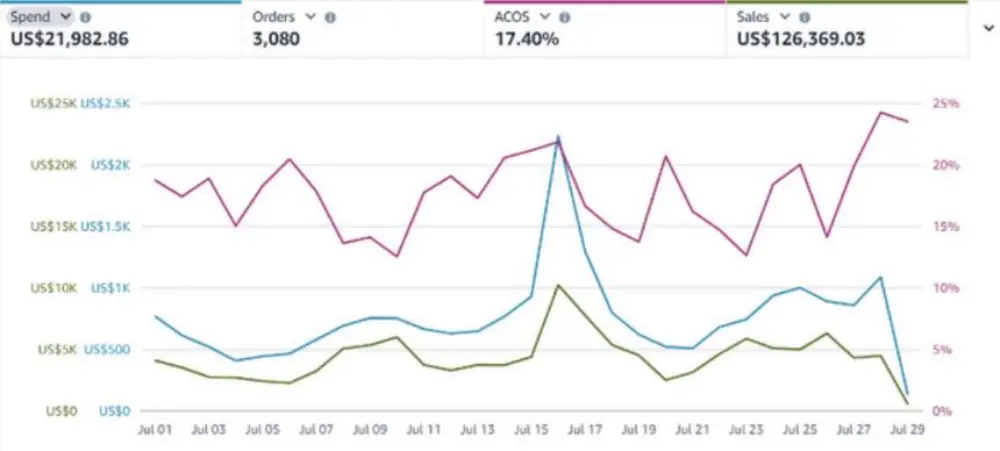
What Do These PPC Strategies Look Like in Real Accounts?
Here are results from Amazon accounts we manage, where tighter structure and steady optimization cut wasted spend and grew sales.
Actionable Takeaways
- Find your break-even ACOS from your profit margin before you change any bids.
- Track ACOS and TACOS together, so you do not cut sales by accident.
- Give each campaign one job: discover, test, or scale.
- Review search terms weekly and add negative exact keywords with a clear click or spend rule.
- Lower bids on bleeders before you pause them.
- Put more budget on exact match keywords that already convert.
- Use product targeting and Sponsored Display to reach new and returning shoppers.
- Fix price, images, and reviews so more clicks become orders.
Frequently Asked Questions
What is a good ACOS on Amazon?
There is no single good ACOS. A good ACOS is one that stays below your break-even ACOS and fits your goal. A launch may accept a higher ACOS to gain sales. A mature product should aim for profit.
How do I lower ACOS without losing sales?
Remove wasted clicks first with negative keywords and bid cuts on bleeders. Then move budget to exact match keywords that already convert. Fix your listing so more clicks turn into orders.
What is the difference between ACOS and TACOS?
ACOS compares ad spend to ad sales. TACOS compares ad spend to total sales, including organic. ACOS shows ad efficiency. TACOS shows the health of the whole business.
How long does it take to see results?
Most accounts show clear movement in ACOS and visibility within 30 to 45 days. Full optimization often takes 60 to 90 days.
What is the best way to lower ACOS on Amazon?
The best way is to cut wasted clicks and scale what already converts. Use negative keywords, lower bids on bleeders, and move winning terms into exact match. Then improve your listing so more clicks become orders.
How often should you check your Amazon PPC campaigns?
Check search terms and key metrics weekly. Review listing performance and your change log monthly. New or high-spend campaigns may need closer checks.
Is Amazon PPC worth it?
It is worth it when your ACOS stays below your break-even ACOS and ads support total sales growth. If ads only break even and never lift organic sales, adjust your targeting or fix your listing first.
Conclusion
A winning Amazon PPC strategy is not about spending less. It is about spending with purpose. Know your break-even ACOS, give every campaign one job, cut wasted clicks, and scale what works. Then make sure your listing can close the sale. For hands-on help, compare an Amazon advertising agency with an in-house hire.
Want experts to run this for you? See our Amazon PPC management service. If you want a clear view of where your ad spend is leaking, Brandeonix can run a free PPC audit on your account and show you where to start.
Ready to See What Your Ad Account Could Actually Do?
Get a free, no-obligation audit of your Amazon PPC account, we’ll show you exactly where you’re leaving money on the table and what a real strategy would look like.
- Takes less than a minute to submit
- No obligation, no pressure, just a real look at your account
- We’ll tell you honestly if we’re a good fit

The Smart Sellers Edge
AI breakthroughs that help smart Amazon sellers outsell the competition.