You can tell your Amazon agency is working by checking five things every month: total sales growth, TACoS, segmented ACoS (branded vs non-branded), new-to-brand share, and organic sales trend. If total sales and organic sales grow while TACoS holds steady or falls, the agency is working. If ad sales rise but organic and profit are flat or falling, you are paying to move numbers around, not to grow.
| Quick answer: Ask for one monthly report that shows total sales, ad sales, organic sales, TACoS, ACoS split by branded and non-branded, new-to-brand %, and a log of what the agency changed. Judge the trend over 3 months, not a single week. |
This is the checklist we use when sellers ask us to audit another agency. The benchmarks come from public agency guides (mainly SupplyKick) and our own account experience. They are vendor benchmarks, not laws: your category, margin and launch stage change them.
What are the KPIs to check every month to know if your Amazon agency is working?
| KPI | Formula | What good looks like | Red flag |
|---|---|---|---|
| TACoS | Total ad spend / total sales x 100 | 8-15% for established products; 25-40% for new launches in the first 3-6 months | Not reported, or rising while ACoS looks fine |
| ACoS (branded) | Branded ad spend / branded ad sales | About 5-15% | Blended ACoS only |
| ACoS (non-branded) | Non-branded ad spend / non-branded ad sales | About 25-50%, set by your margin | More than 70% of spend on branded terms |
| New-to-brand % | New customers / total ad customers | Consumables 30-50%; durables 70-90% | Falling for 3+ months |
| Organic sales | Total sales minus ad-attributed sales | Flat or growing | Falling while ad sales rise |
| Incremental ROAS | Extra sales caused by ads / ad spend | Competitive non-branded 2.5-4x is strong | Blended below 1.5x |
| Contribution margin per ASIN | Revenue minus COGS, fees, shipping and ads | Positive on core ASINs | Not tracked at all |
Sources: SupplyKick, “Amazon Agency KPIs: The Metrics That Actually Matter” (updated Sep 2026). Treat the ranges as starting points.
Is TACoS better than ACoS for judging an agency?
Yes, for judging the agency. ACoS only tells you how efficient the ads are on their own. A good ACoS can still hide a bad business if ads are stealing sales you would have made organically. TACoS divides ad spend by all sales, so it shows whether ads are building the whole business.
| Scenario | ACoS | TACoS | What it usually means |
|---|---|---|---|
| ACoS falls, TACoS falls, total sales rise | Down | Down | Ads are building organic rank. This is the goal. |
| ACoS falls, TACoS rises | Down | Up | Agency moved spend to branded terms. Efficiency looks good, growth does not. |
| ACoS rises, TACoS falls | Up | Down | Often a healthy launch or rank push. Check organic sales. |
| ACoS flat, TACoS rises, organic falls | Flat | Up | Ads are replacing organic sales. Ask why. |
How can sales go up while profit goes down?
This is the most common complaint from sellers on Reddit-style forums: “my agency says ROAS is great but my bank account says otherwise.” The reason is that ROAS and ACoS ignore your margin. A 4.0 ROAS means a 25% ACoS, which loses money if your margin before ads is only 20%.
| Item | Month 1 | Month 2 |
|---|---|---|
| Total sales | $50,000 | $62,000 |
| Ad spend | $7,500 | $12,400 |
| TACoS | 15% | 20% |
| Margin before ads (30%) | $15,000 | $18,600 |
| Profit after ads | $7,500 | $6,200 |
Sales grew 24% and profit fell 17%. An agency that only reports “sales up” would call this a win. This is why you need TACoS and contribution margin, not just revenue. Our PPC budget guide shows how to set spend against margin.
Which agency metrics are vanity metrics?
| Vanity metric | Why it misleads | Ask for this instead |
|---|---|---|
| Impressions | Free to buy, says nothing about sales | Unit session % and orders |
| Clicks | Bad clicks cost money | Cost per order by keyword type |
| Blended ACoS | Branded terms hide weak non-branded results | Branded vs non-branded ACoS |
| ROAS alone | Ignores margin and fees | Contribution margin and TACoS |
| Ad sales alone | Can come from sales you would have had anyway | Organic sales trend and new-to-brand % |
What should I see in a 30, 60 and 90-day scorecard?
| Period | What to expect | What the agency should show you |
|---|---|---|
| Days 1-30 | Audit done, wasted spend cut, structure rebuilt. Results may be flat. | Audit report, negative keywords added, baseline TACoS and ACoS |
| Days 31-60 | Search term data starts guiding bids. Non-branded ACoS begins to settle. | Weekly change log, first test results |
| Days 61-90 | Clear direction: TACoS stable or falling, organic rank improving. | Month-over-month trend, plan for next quarter |
Give any agency at least 90 days unless there are clear red flags. Amazon data takes time, and a new structure needs several weeks of clicks to learn. Judge the trend, not one bad week.
Which numbers should I review monthly vs quarterly?
| Cadence | Check |
|---|---|
| Monthly | Total, ad and organic sales; TACoS; ACoS split; ROAS by campaign type; new-to-brand %; top and bottom ASINs; log of agency actions |
| Quarterly | Share of voice on 5-10 priority keywords; catalog health; incrementality; profit by product line; year-over-year versus category |
Account health matters too: keep order defect rate under 1%, Listing Quality Score high, and an inventory performance index above 400 to avoid storage limits (SupplyKick guidance).
What are the red flags that your Amazon agency is not working?
| Red flag | What it means |
|---|---|
| Only ACoS is reported, never TACoS | They may be hiding total-business trends |
| No branded vs non-branded split | Branded sales may be making results look better |
| Organic sales falling while ad sales rise | Ads may be cannibalizing organic sales |
| No documented changes | You cannot tell what they actually did |
| No talk about new-to-brand customers | Growth may be coming from existing buyers only |
| Attribution limited to 7-day last click | You miss the full picture of customer journeys |
| No margin or profit metrics | They do not know if you make money |
What should I ask my agency when the numbers look bad?
| Question | Why ask |
|---|---|
| What changed in the last 30 days, and why? | Tests if they keep a change log |
| What is my branded vs non-branded split? | Reveals where spend goes |
| How is TACoS trending, and what is the target? | Checks they plan beyond ACoS |
| Which ASINs lose money after ads? | Checks profit awareness |
| What will you test next month? | Shows a real plan |
How long should I give an Amazon agency before switching?
Give 90 days if the audit, change log and reporting are strong. Switch earlier if they refuse to share account access or reports, hide TACoS, or cannot explain their own changes. Check your contract too: long lock-ins with no exit clause are a risk. See our guide on how to choose an Amazon marketing agency for contract terms to watch.
Is a high ACoS always a sign the agency is failing?
No. A high ACoS during a launch or rank push can be correct if TACoS is stable and organic sales are climbing. What matters is whether the spend is building rank and new customers. A low ACoS can be the worse sign if it comes from heavy branded spend and no growth.
Real results from accounts we manage
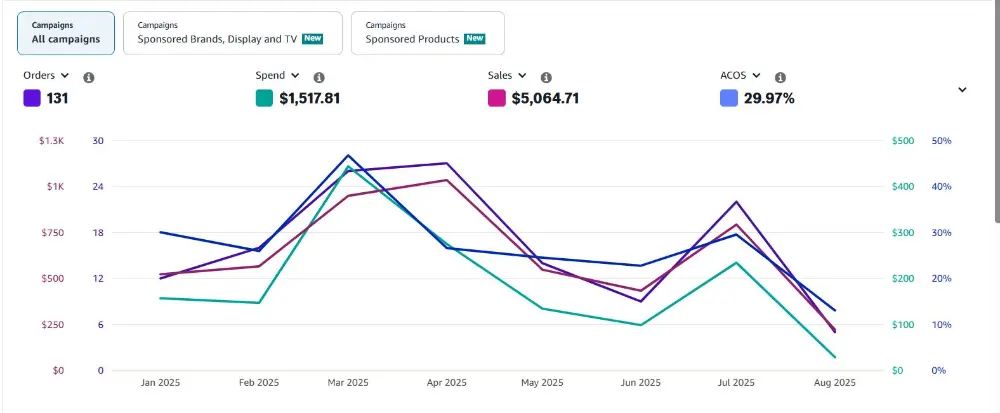
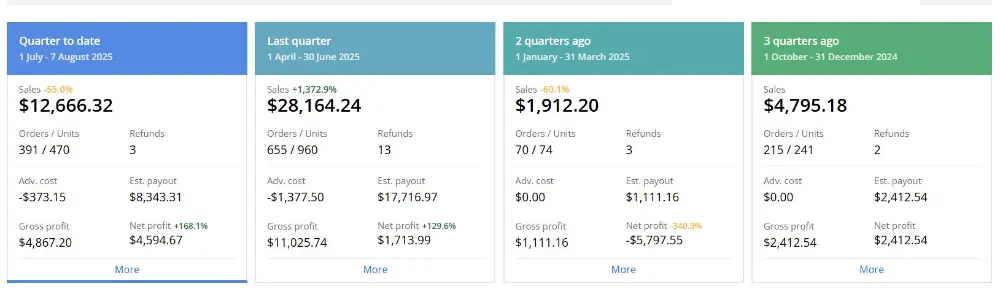
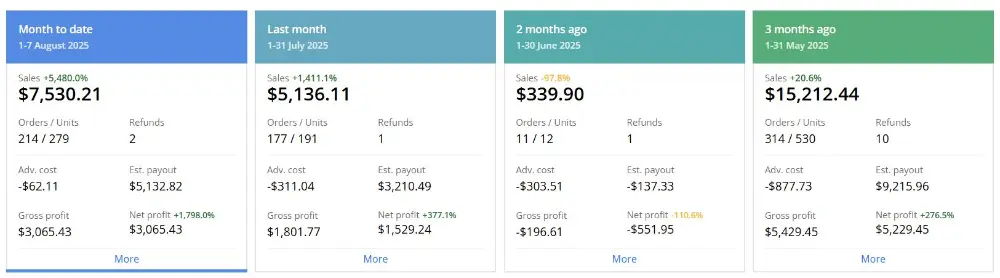
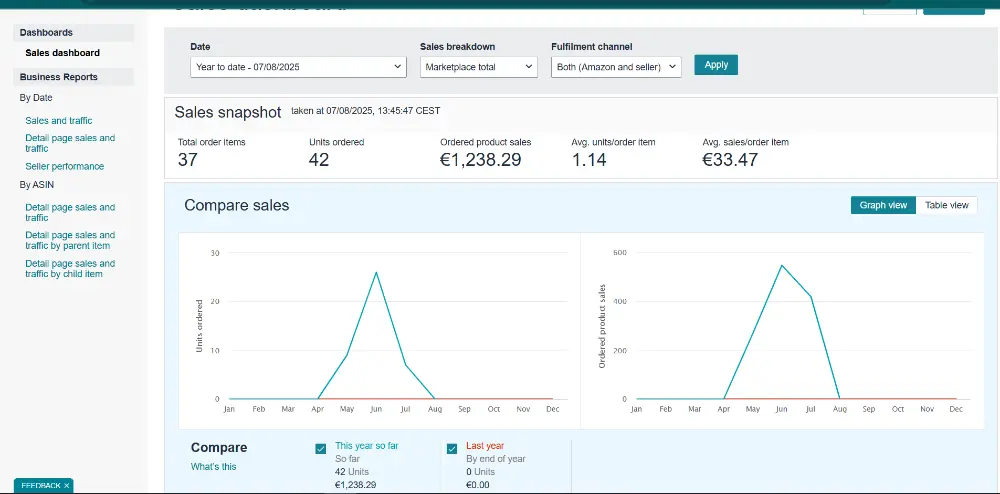
These screenshots come from Amazon PPC accounts we run. Results vary by category, margin and starting point.
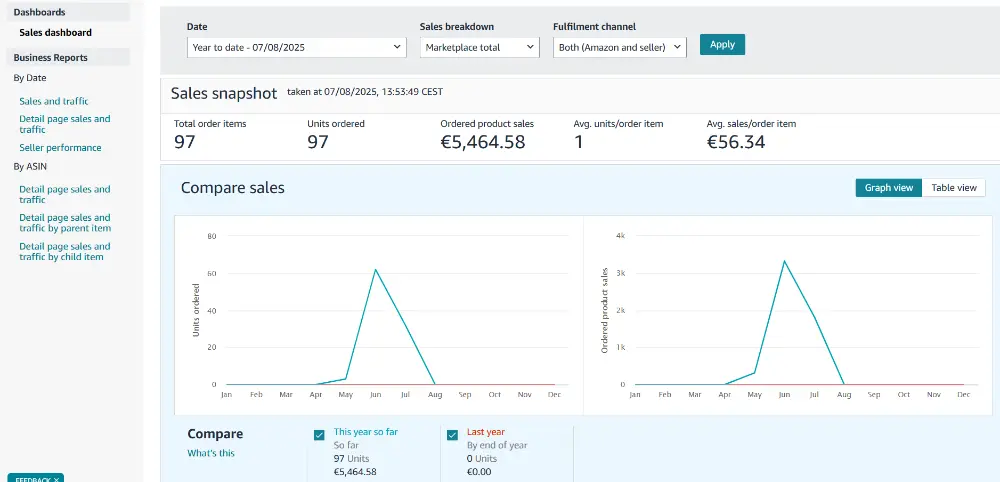
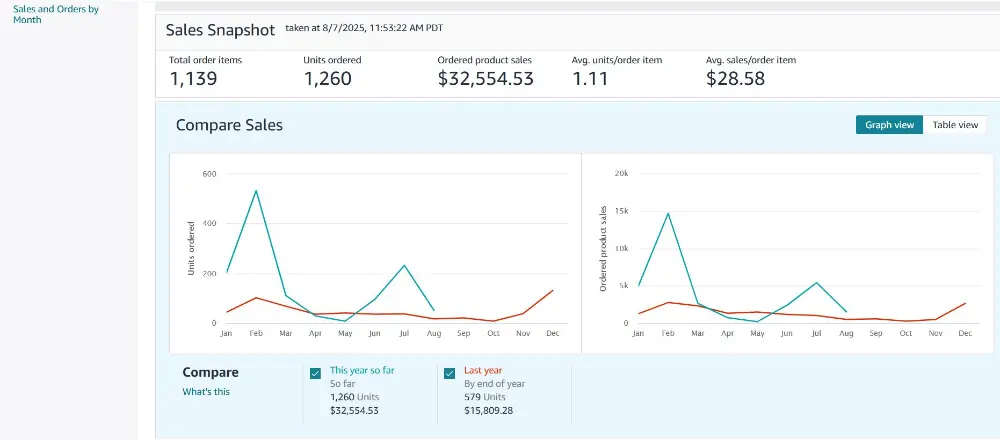
For a deeper plan on structure and bids, read our Amazon PPC strategy guide or see the PPC management service.
Frequently asked questions
How do I know if my Amazon PPC agency is doing a good job?
Check that total sales and organic sales are stable or growing, TACoS is steady or falling, and you receive a monthly report with branded vs non-branded ACoS and a log of changes. If you only get ad sales and ROAS, ask for more.
What is a good TACoS for an Amazon agency to hit?
SupplyKick suggests 8-15% for established products and 25-40% for new launches in the first 3-6 months. Your margin and category set the real target.
My agency says ACoS is good but profit is down. Why?
ACoS ignores your margin, fees and organic sales. Ask for TACoS and contribution margin per ASIN. A 25% ACoS loses money on a 20% margin.
How long does it take to see results from an Amazon agency?
Expect cleanup and structure changes in the first 30 days and clear trends by days 60-90. Launches can take longer.
Should I have access to my Amazon Ads account?
Yes. You should own the account and be able to see campaigns, search terms and reports at all times. Be careful with agencies that restrict access.
What reports should an Amazon agency send each month?
Total, ad and organic sales, TACoS, segmented ACoS, new-to-brand %, ROAS by campaign type, top and bottom ASINs, and a change log.
When should I fire my Amazon agency?
If trends are flat or negative after 90 days with no clear plan, or they hide data, skip reporting, or cannot explain changes.
Is ROAS or ACoS better to track?
They are two views of the same ratio (25% ACoS = 4.0 ROAS). Neither accounts for margin, so pair them with TACoS and contribution margin.
Want a second opinion on your agency?
At Brandeonix, we manage Amazon PPC for sellers every day. We will review your reports, TACoS and account structure and tell you plainly whether things are working. No pressure to switch.
Ready to See What Your Ad Account Could Actually Do?
Get a free, no-obligation audit of your Amazon PPC account, we’ll show you exactly where you’re leaving money on the table and what a real strategy would look like.
- Takes less than a minute to submit
- No obligation, no pressure, just a real look at your account
- We’ll tell you honestly if we’re a good fit

The Smart Sellers Edge
AI breakthroughs that help smart Amazon sellers outsell the competition.