Updated November 2026.
A high ACoS usually comes from two places: ad spend that goes to search terms that never buy, and a listing that does not turn clicks into orders. Cutting bids is the last thing to try, not the first. This guide shows how to find where your money leaks and fix it in order.
| Quick answer: To reduce ACoS on Amazon, (1) work out your break-even ACoS, (2) find where the funnel breaks, (3) add negative keywords for terms that spend and never sell, (4) move converting terms to exact match, (5) lower bids slowly, (6) fix listing conversion, and (7) watch TACoS so you do not cut growth along with waste. |
We compared seven public guides on this topic, plus real questions from sellers on Reddit. Where the guides give different numbers, we show the range instead of choosing one.
What is ACoS, and what is a high ACoS?
ACoS means advertising cost of sales. It is your ad spend divided by the sales those ads brought in. If you spend $25 and the ads bring $100 in sales, your ACoS is 25%.
There is no single good number. Guides disagree, and that is fine, because the right number depends on your margin. Here is the range we found:
| Stage | ACoS range some guides use |
|---|---|
| Product launch | 25% to 40% |
| Growth | 22% to 30% |
| Mature product | 15% to 22% |
These ranges come from vendor guides, not from Amazon, so use them as a rough picture only. Our post on what is a good ACoS on Amazon explains how to set your own number.
Step 1: Work out your break-even ACoS
Break-even ACoS is the highest ACoS where you still do not lose money on a sale. It equals your profit margin before ads.
Take your price and subtract your product cost, Amazon fees and shipping. Divide what is left by the price. Example: you sell at $100, and all costs add up to $60. Your margin is 40%, so your break-even ACoS is 40%. If you want a 15% profit after ads, your target ACoS is 25%.
This step matters because a 35% ACoS is a disaster for one seller and perfectly fine for another. Do this before you touch a single bid.
Step 2: Check TACoS next to ACoS
TACoS is total ad spend divided by your total revenue, both ad sales and organic sales. It shows whether ads are helping the whole business.
Almost every guide we read says to watch both. A seller on Reddit with a new product and a $350,000 a year account saw TACoS climb from about 15% to 22% and asked which agency to hire. The replies said the fix was to check the organic-to-ad sales ratio first, and to tie any agency fee to profit, not sales.
Simple rule: if ACoS is high but TACoS is falling, your ads may be building organic sales, so do not panic. If both rise together, you have a real leak.
Step 3: Find where the funnel breaks
Your ad results follow a chain: impressions, clicks, orders, sales. ACoS rises when cost per click goes up, when fewer clicks turn into orders, or when fewer shoppers click. Find the weak link before you change anything.
| What you see | Likely cause | Fix |
|---|---|---|
| Many impressions, few clicks | Weak main image or title, or wrong search terms | Test a new main image, tighten targeting |
| Many clicks, few orders | Listing, price or reviews | Improve the listing and offer |
| Good conversion, high cost per click | Bids too high | Lower bids in small steps |
| ACoS jumps around daily | Not enough data | Judge over 7 to 14 days, not one day |
A Reddit seller with a new supplement and a 170% ACoS got the same advice from several people: first decide whether the problem is conversion (listing, price, reviews) or wasted spend. Most of the waste, they said, sits in a few bad search terms.
Step 4: Add negative keywords for wasted spend
Open your search term report and sort it by spend. Look for terms that got clicks and no sales. These are the fastest savings you will find. You can also spot the hours that waste spend with our free dayparting analyzer.
Two rules of thumb appear in public guides. One says to negate a term after 20 or more clicks with no sale. Another says to negate a term that spent more than $20 with no sale. Both are only rules of thumb. A better test is to compare the spend with your profit per order. If a term has spent the profit of several orders and sold none, cut it.
- Use negative exact for single bad terms.
- Use negative phrase for whole groups that do not fit your product.
- Use negative ASIN for competitor products you do not want to appear against.
- Check your negatives now and then so they do not block good traffic.
Do this weekly. One guide says that if you have added no negatives in 30 days, you are probably leaking money.
Step 5: Move converting terms to exact match
Auto and broad campaigns find new terms. Exact campaigns spend on terms that already sell. When a term from your search term report has made sales, move it into an exact match campaign. One guide suggests waiting for three or more orders first.
When you move a term, add it as a negative exact in the auto campaign it came from, so the two campaigns do not bid against each other. Keep each match type in its own campaign so you can see what works. If you are not sure when to use which type, our post on Sponsored Products vs Sponsored Brands covers campaign types, and our Amazon PPC strategy guide covers structure.
Step 6: Lower bids slowly
If a campaign converts well but costs too much per click, the bid may be too high. Cut it in small steps. One guide suggests 10% to 15% at a time, and waiting 3 to 5 days between changes. Big cuts can make your ad vanish from the top of the results, and your sales drop with it.
One opposite tip is worth knowing. If a keyword with good conversion gets very few impressions, the bid may be too low. Raise it a little and test for one to two weeks. Bids are a tool in both directions.
Step 7: Fix the listing so clicks turn into orders
If many shoppers click and few buy, no bid change will fix that. Look at the main image, the title, the price against your rivals, your review count and rating, and the first lines of your bullets. A seller on Reddit asking how to rank in 2026 got a short answer from several people: conversion rate compared with your category is the main lever. We cover this in our listing optimization service page, and a better listing also improves your organic rank, which lowers TACoS over time.
When is a high ACoS fine?
A high ACoS can be the right choice in three cases. First, a new launch, where you buy reviews and rank with ads. Second, a brand defense campaign. Third, a product with strong repeat purchases, where the first sale costs more but the customer comes back. Always judge it against your break-even ACoS and TACoS, not against a number you read on a blog. A seller on Reddit who asked how to reach an ACoS under 10% got a useful reply: ACoS follows relevance, so the fix is reviews, organic rank and exact-match terms, not bid tricks.
A weekly routine that keeps ACoS down
- Pull the search term report and sort by spend.
- Add negatives for terms that spent and did not sell.
- Move new winners to exact match.
- Check campaigns that are far above your target ACoS for two weeks or more.
- Look at TACoS and organic sales once a week.
If this feels like a lot, that is normal. Many brands hand it over once the account is large. Our Amazon PPC management team starts every account with this exact review, and our guide on how much to spend on Amazon PPC helps you set the budget first.
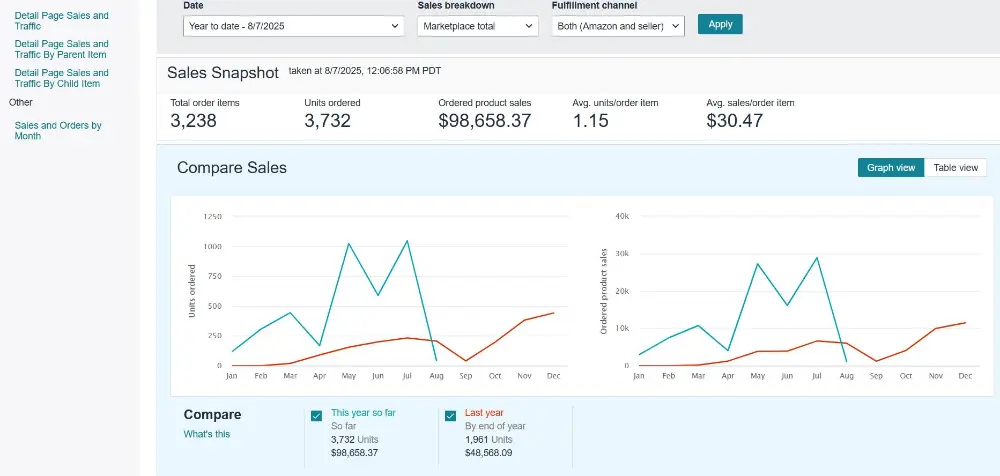
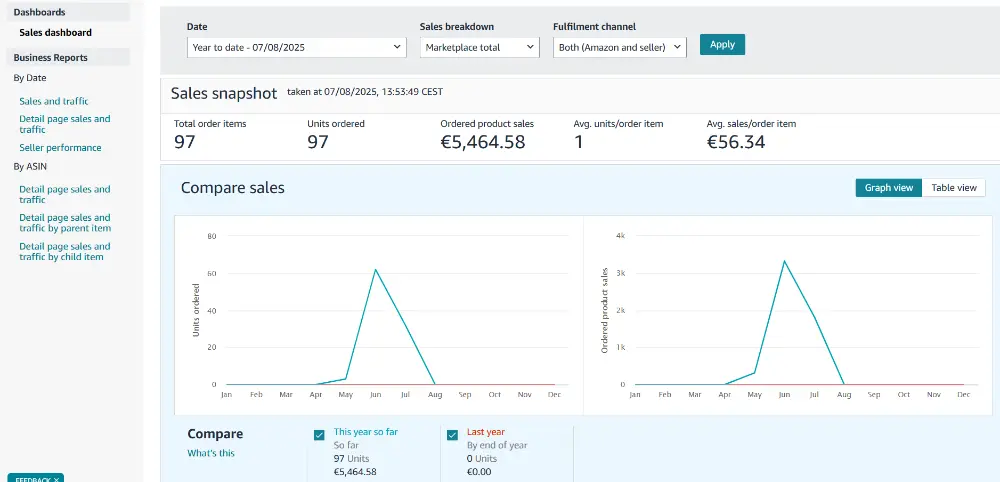
Real results from brands we work with
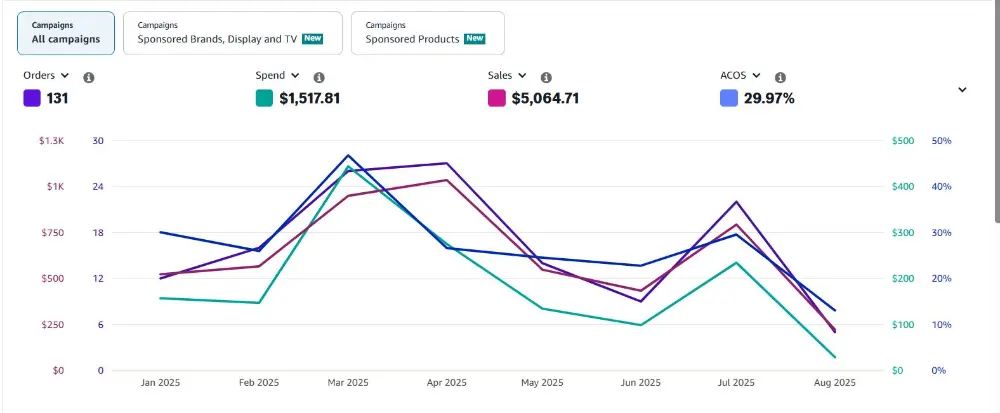
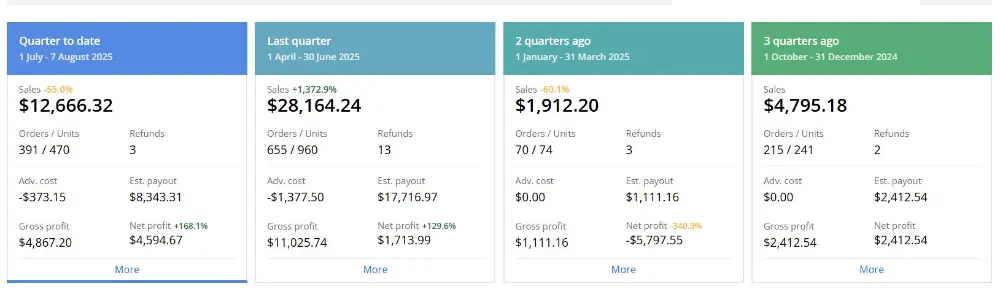
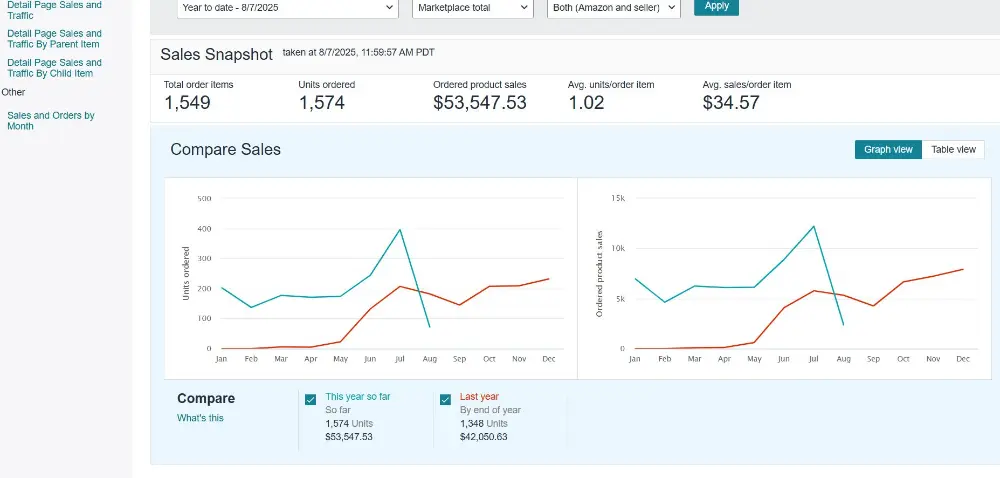
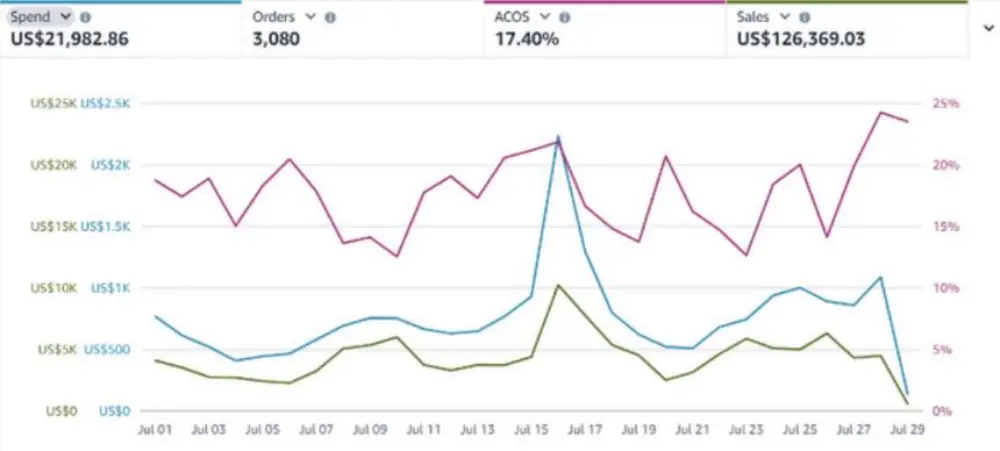
Screenshots from accounts we manage. Results vary by category, price and starting point.
Frequently asked questions
How do I reduce ACoS on Amazon fast?
Pull the search term report, add negative keywords for terms that spent and did not sell, and move converting terms to exact match. This usually saves the most money in the shortest time.
What is a good ACoS on Amazon?
It depends on your margin. Your break-even ACoS equals your profit margin before ads. Guides give ranges from about 15% for mature products to 25% to 40% for launches, but your own margin matters more.
Is a 170% ACoS normal for a new product?
It is not normal, but it is common in a rough launch. First check whether the problem is conversion or wasted spend. Most of the waste is often in a few bad search terms.
What is the difference between ACoS and TACoS?
ACoS is ad spend divided by ad sales. TACoS is ad spend divided by total sales, both ad and organic. TACoS shows if ads are growing the whole business.
How often should I add negative keywords?
Weekly. Sort the search term report by spend and cut terms that got clicks and no sales.
Should I lower my bids to lower ACoS?
Only after you have cleaned search terms and checked the listing. Cut bids in small steps of 10% to 15%, and wait a few days between changes.
Can a high ACoS be good?
Yes, for a launch, a brand defense campaign, or a product with strong repeat sales. Judge it against your break-even ACoS and TACoS.
Should I hire an agency to lower my ACoS?
Not before you know where the leak is. If you do hire, tie the fee to profit measures such as ACoS or TACoS, not to sales alone.
Ready to See What Your Ad Account Could Actually Do?
Get a free, no-obligation audit of your Amazon PPC account, we’ll show you exactly where you’re leaving money on the table and what a real strategy would look like.
- Takes less than a minute to submit
- No obligation, no pressure, just a real look at your account
- We’ll tell you honestly if we’re a good fit

The Smart Sellers Edge
AI breakthroughs that help smart Amazon sellers outsell the competition.