Most Amazon sellers should spend about 8% to 15% of their revenue on PPC once a product is established, and 20% to 50% of expected revenue while launching a new one. In daily terms, a new product usually needs $30 to $150 per day on its core campaigns. The right number depends on your product stage, your margin and how many clicks you need to get real data.
That is the short answer. Below you get the budget for each product stage, a formula to find your own number, a table of daily budgets, and the mistakes that waste ad money. Published ranges differ by source, so we show them as starting points, not fixed rules.
| Quick answer: Launch: 20%-50% of expected revenue (about $30-$150/day per core product). Growth: 15%-30%. Maintenance: 8%-15%. Never spend more than your break-even ACoS allows. |
How much should you spend on Amazon PPC per month?
There is no single correct number. Sources give different ranges because they measure different things: some use a share of total sales, some use a share of ad-driven sales, and some use a daily cap. Use the table as a starting range, then adjust with your own data.
| Product stage | Ad spend as % of revenue | Typical daily budget (per core product) | Main goal |
|---|---|---|---|
| Launch (0-90 days) | 20%-50% of expected revenue | $30-$150 | Get reviews, ranking and keyword data |
| Growth (3-12 months) | 15%-30% | $50-$300 | Scale winners, protect rank |
| Maintenance (mature) | 8%-15% | $20-$100 | Hold rank, raise profit |
| Overall rule of thumb | 10%-15% of total revenue | Varies | Quick planning number |
Your total ad cost is the sum of every campaign. A seller earning $50,000 per month in a growth stage might plan $7,500 to $15,000 in ads. A mature seller at the same revenue might plan $4,000 to $7,500.
How much should you spend on Amazon PPC when launching a new product?
Launch is the most expensive stage, and that is normal. A new listing has no reviews, no sales history and no rank, so ads are the main way to get the first sales. Plan to run at a loss or near break-even for the first 30 to 90 days.
A practical launch budget is $30 to $150 per day for each core product. Lower-priced products with cheap clicks can start near $30. Competitive categories such as supplements, beauty and electronics often need $100 or more.
How many clicks do you need to get useful data?
Budget by clicks, not by guesswork. A common target is 200 to 500 clicks per product over 30 days. At a $0.90 cost per click, 300 clicks cost $270. If your listing converts at 10%, that gives about 30 orders, which is enough to see which keywords work.
How much should you spend on Amazon PPC in the growth and maintenance stages?
In growth, your listing already converts, so more budget usually means more profitable sales. Spend 15% to 30% of revenue and raise budgets on the campaigns that hit your target ACoS. In maintenance, cut waste, keep rank with branded and top-converting terms, and aim for 8% to 15%.
| Question | Launch | Growth | Maintenance |
|---|---|---|---|
| Target ACoS | Above break-even is acceptable | At or below break-even | Well below break-even |
| Campaign focus | Auto + broad + exact research | Exact match, Sponsored Brands | Branded, defensive, top terms |
| Budget change | Keep stable for 2-4 weeks | Raise 10%-20% at a time | Trim low performers |
| Success metric | Reviews, rank, data | Sales growth at target ACoS | TACoS and profit |
How do you calculate your own Amazon PPC budget?
Start with your break-even ACoS, the highest ad cost your margin can take before you lose money. Then work out how many sales you want and how much they will cost.
Step 1: Find your break-even ACoS
Break-even ACoS equals your profit margin before ad spend. If a $30 product leaves $9 after Amazon fees and product cost, your margin is 30%, so break-even ACoS is 30%.
Step 2: Find your maximum CPC
Maximum CPC = price x target ACoS x conversion rate. Example: $30 x 25% x 12% = $0.90. Bid above that and each sale costs more than your target.
Step 3: Set the monthly budget
Multiply desired clicks by CPC. Want 300 clicks at $0.90? Your monthly budget is $270, or about $9 per day. Amazon also says a daily budget can be exceeded by up to 25% on a given day, as long as the monthly average stays within your set budget, so do not panic if one day runs high.
| Input | Example value | Result |
|---|---|---|
| Price | $30 | – |
| Margin before ads (break-even ACoS) | 30% | Max ACoS 30% |
| Target ACoS | 25% | Profit buffer |
| Conversion rate | 12% | – |
| Maximum CPC | $30 x 25% x 12% | $0.90 |
| 300 clicks x $0.90 | – | $270 per month |
How should you split your budget between ad types?
Put most of the money into Sponsored Products because they bring the most direct sales. Use the rest to test Sponsored Brands and retargeting formats.
| Ad type | Share of budget | Role |
|---|---|---|
| Sponsored Products | 60%-80% | Direct sales, keyword data |
| Sponsored Brands | 15%-25% | Brand reach, new-to-brand shoppers |
| Sponsored Display | 5%-15% | Retargeting, defense |
Each campaign needs a workable daily budget. As a rule, do not go below about $10 per campaign, or it runs out of budget before noon and misses your best hours.
How do you scale Amazon PPC spend without wasting money?
Raise budgets in small steps. Move spend up 10% to 20% at a time, wait a few days, and check ACoS before raising it again. Big jumps reset learning and often push cost per click up.
Should you change budget for seasons like Prime Day and Q4?
Yes. Clicks cost more and traffic is higher during peak events. Raise budgets 1 to 2 weeks before so campaigns keep serving, then return to normal after the event. Check search term data each week so the extra spend goes to terms that convert.
How much does an Amazon PPC agency cost on top of ad spend?
Agency fees are separate from your ad budget. Common pricing is a percentage of ad spend, often 8% to 20%, or a flat monthly fee that runs from about $1,000 to $5,000 depending on account size. Ask whether fees are charged on spend or on sales, and what is reported each month.
What mistakes make Amazon PPC budgets fail?
- Setting budgets too low. Campaigns stop early in the day and never gather data.
- Ignoring margin. A 35% ACoS on a 25% margin loses money on every sale.
- Raising budget before the listing converts. More traffic to a weak page only increases waste.
- Changing too much at once. You cannot tell which change helped.
- Never reviewing search terms. Wasted clicks keep draining spend.
What do real Amazon PPC budgets look like in practice?
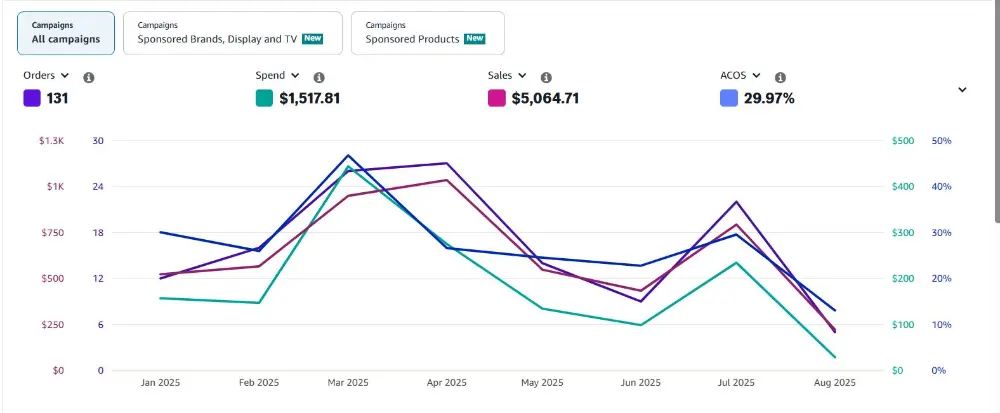
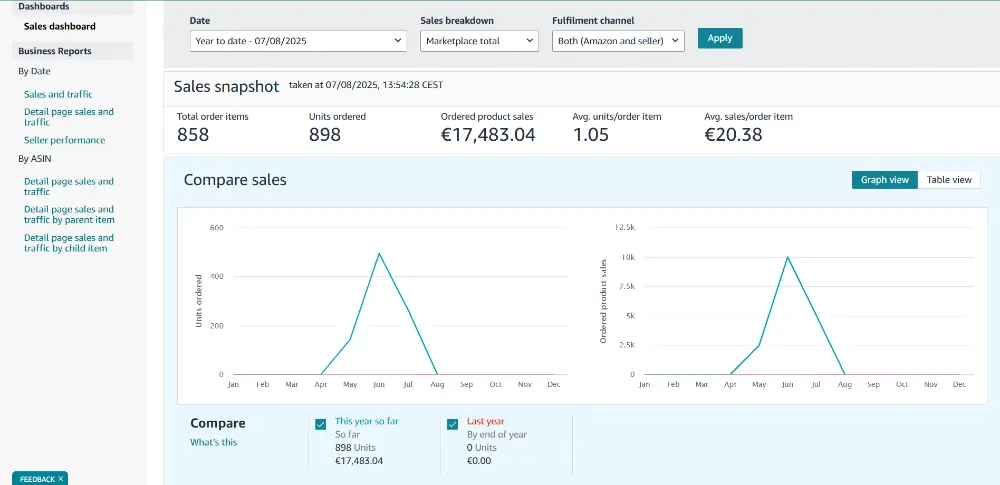
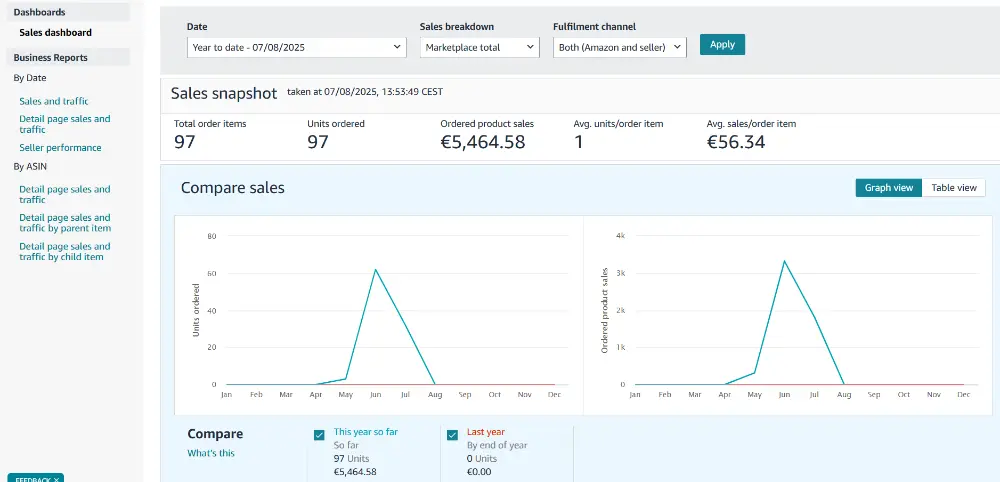
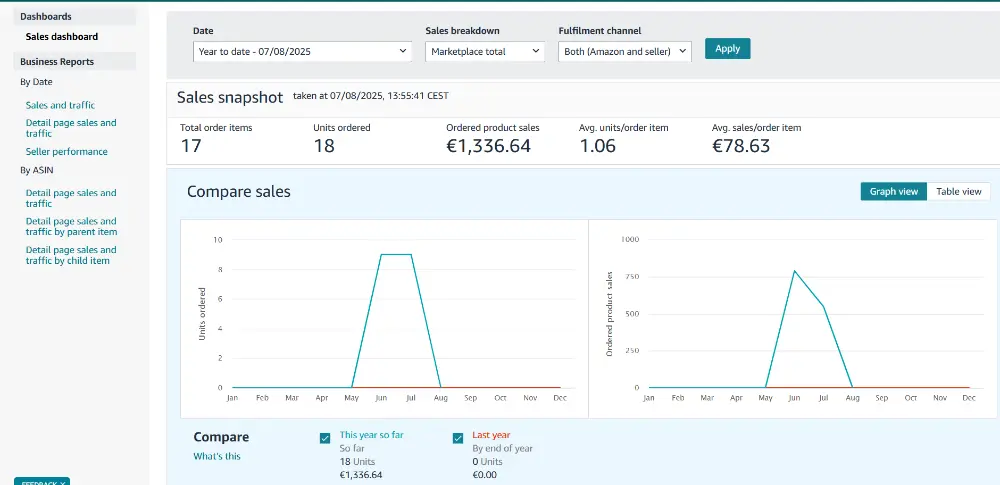
Here are results from accounts we manage, where budgets were set by stage and scaled step by step.
Once your budget is set, check that spend is working with the KPIs in our guide on how to know if your Amazon agency is working.
Frequently asked questions
What is a good daily budget for Amazon PPC?
For a new product, $30 to $150 per day. For an established product, $20 to $100. Start where you can collect about 200 to 500 clicks a month.
What percentage of sales should go to Amazon ads?
Many sellers use 8% to 15% of revenue when mature and more during launch. Your margin sets the real limit.
Is $10 a day enough for Amazon PPC?
It can work for one low-competition product or a single test campaign, but it is rarely enough for a full launch in a busy category.
How long before Amazon PPC pays off?
Expect 30 to 90 days. Launch campaigns often run at break-even or a loss first, then become profitable as reviews and rank build.
Can I exceed my Amazon daily budget?
Yes. Amazon can spend up to 25% above a daily budget on some days, but the monthly average should stay at your set amount.
What is a good ACoS?
A good ACoS is one below your break-even ACoS. Launch campaigns may run above it, while mature campaigns should sit well below it.
Conclusion
Budget by stage: invest heavily in launch, scale winners in growth, and protect profit in maintenance. Tie every dollar to your break-even ACoS and to the clicks you need. If you want expert help setting this up, see our Amazon PPC management service. If budget planning feels hard, an Amazon marketing agency can help you set it by margin.
Ready to See What Your Ad Account Could Actually Do?
Get a free, no-obligation audit of your Amazon PPC account, we’ll show you exactly where you’re leaving money on the table and what a real strategy would look like.
- Takes less than a minute to submit
- No obligation, no pressure, just a real look at your account
- We’ll tell you honestly if we’re a good fit

The Smart Sellers Edge
AI breakthroughs that help smart Amazon sellers outsell the competition.